Hypermobile? 10 Signs You May Have EDS

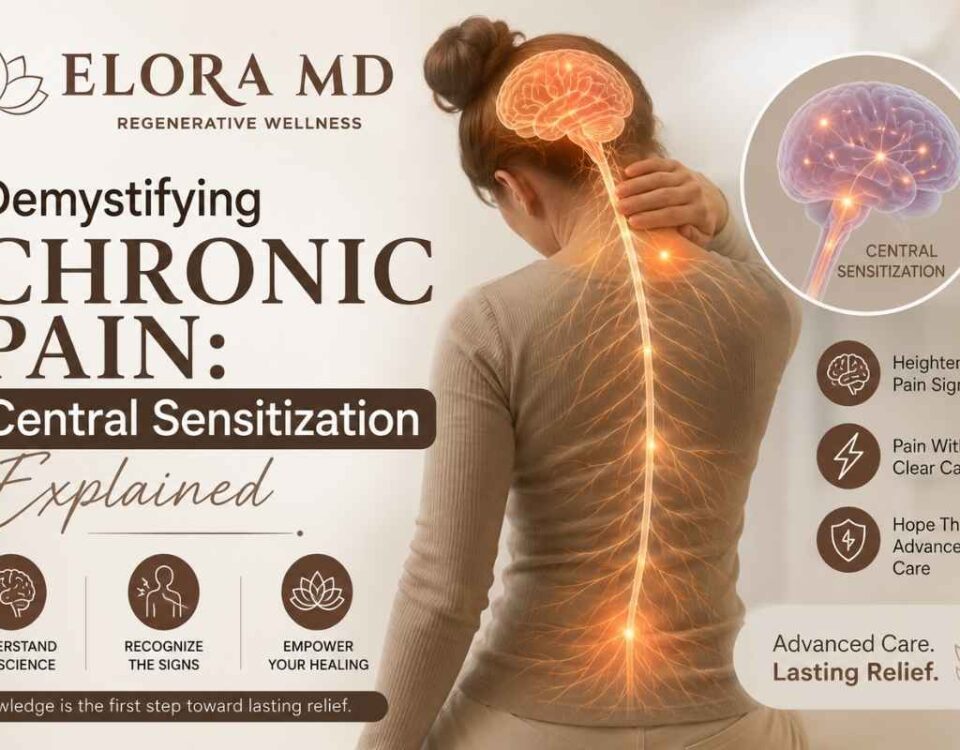
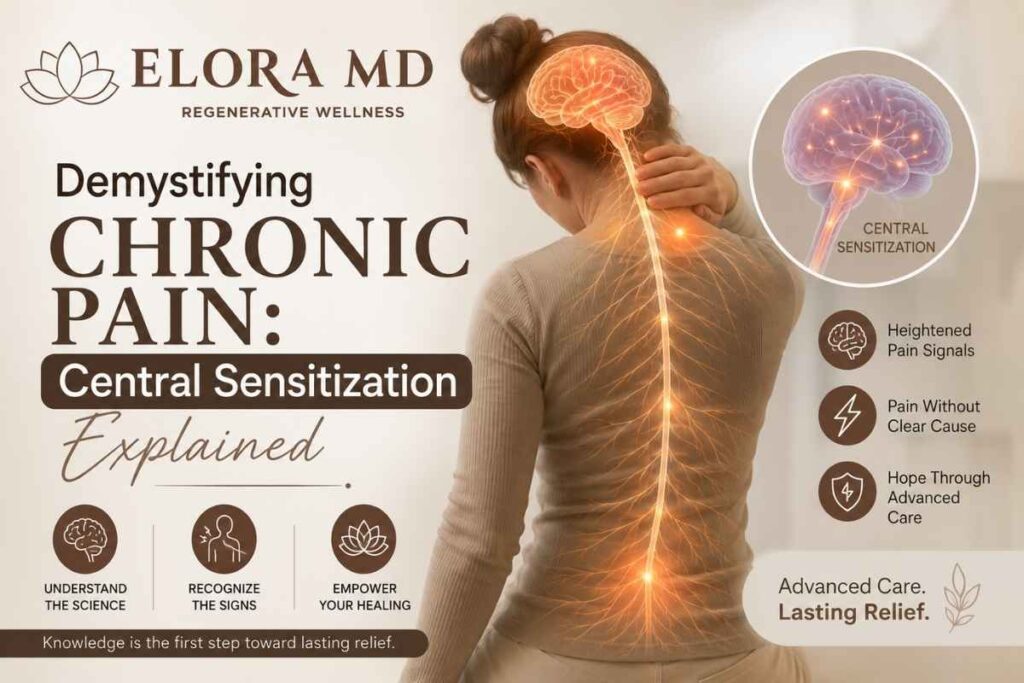
Demystifying Chronic Pain: Central Sensitization Explained
July 8, 2026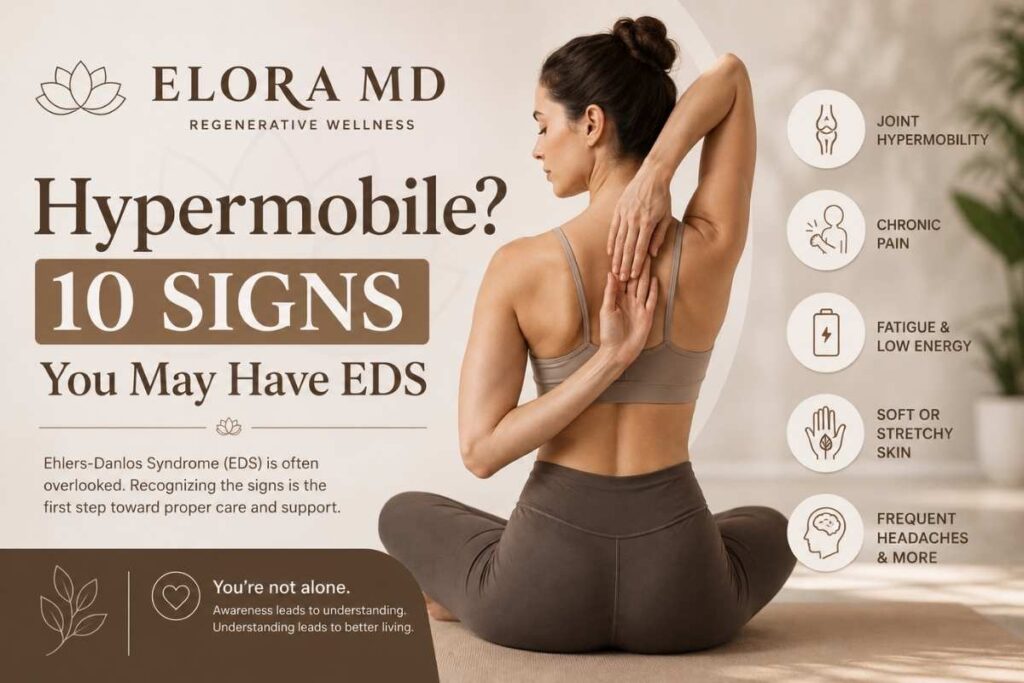
By Dr. Pooja Chopra | Elora MD Regenerative Wellness | Newport Beach, CA
For many people, being “double-jointed” starts off as a fun childhood party trick. You might have been the kid who could bend your thumbs backward, do the splits without stretching, or twist your body into unusual shapes. But as the years go by, what was once a harmless quirk can transform into a cascade of mysterious, chronic health issues.
If you are dealing with unexplained joint pain, frequent injuries, chronic fatigue, and a body that simply feels unstable, you might be dealing with more than just standard hypermobility. You may be one of the thousands of people living with undiagnosed Ehlers-Danlos Syndrome (EDS) or Hypermobility Spectrum Disorder (HSD) [1].
At Elora MD in Newport Beach, CA, we specialize in getting to the root of complex connective tissue and pain disorders. Let us dive into what EDS actually is, the hidden signs you should look out for, and how a regenerative approach can help you reclaim your stability and your life.
What is Ehlers-Danlos Syndrome?
Ehlers-Danlos Syndrome is not a single disease, but a group of 13 heritable connective tissue disorders [1]. Your connective tissue is the “glue” that holds your entire body together—it is the foundational material of your ligaments, tendons, skin, blood vessels, and internal organs. This glue is made primarily of a protein called collagen [2].
In someone with EDS, genetic mutations or other factors cause the body to produce collagen that is faulty, fragile, or highly elastic [2]. Instead of strong, tight rubber bands holding your joints in place, your body is working with overstretched, loose elastic. The most common variation is Hypermobile EDS (hEDS), which is characterized by extreme joint flexibility and chronic pain [1].
Because collagen is found everywhere in the body, EDS does not just affect the joints; it is a systemic condition. Here are 10 signs that your hypermobility might actually be Ehlers-Danlos Syndrome.
10 Signs You Might Have EDS
1. Extreme Joint Hypermobility
The hallmark of hEDS is joints that move far beyond the normal physiological range of motion. Doctors measure this using the Beighton Score, a 9-point system [1]. Signs include being able to bend your pinky finger backward beyond 90 degrees, pulling your thumb down to touch your forearm, or having elbows and knees that bend backward (hyperextend) when fully straightened.
2. Frequent Subluxations and Dislocations
Because the ligaments are too lax to hold the joints securely, people with EDS often experience subluxations (partial dislocations) or full dislocations. This can happen during mundane activities—your shoulder might slip out of socket while reaching for a high shelf, or your kneecap might slide out of place when simply walking down the stairs.
3. Chronic, Widespread Pain
Living with loose joints is exhausting. Because your ligaments are not doing their job, your muscles have to work overtime, clamping down to keep your skeleton stable. This constant muscle tension leads to profound myofascial pain, muscle spasms, and severe, chronic joint aches that standard painkillers barely touch [1].
4. Stretchy, Velvety Skin
Collagen defects heavily impact the skin. Many people with EDS have skin that feels unusually soft, velvety, or “doughy.” The skin may also be mildly hyperextensible, meaning you can pull it away from your body further than the average person can, particularly on the neck, cheeks, and forearms [1] [2].
5. Abnormal Bruising and Scarring
Fragile connective tissue means fragile blood vessels and poor wound healing. You might constantly wake up with bruises and have no idea how you got them [2]. When you do get a cut or have surgery, the resulting scars often stretch out over time, becoming widened, thin, and papery (often referred to as atrophic or “cigarette paper” scars) [1].
6. Profound Chronic Fatigue
The sheer amount of energy it takes for an EDS body to remain upright and stable against gravity is immense. Your muscles are essentially running a marathon every day just to keep your joints in place. Combined with poor sleep due to pain, this results in a crushing, unyielding chronic fatigue.
7. Autonomic Nervous System Dysfunction (Dysautonomia)
EDS rarely travels alone. It is highly correlated with conditions like Postural Orthostatic Tachycardia Syndrome (POTS). Because the blood vessels are overly stretchy, blood pools in the lower extremities when you stand up. To compensate, your heart races, leading to dizziness, lightheadedness, brain fog, and sometimes fainting.
8. Gastrointestinal Distress
The entire digestive tract is lined with connective tissue. Faulty collagen can lead to gut motility issues. Patients frequently suffer from severe acid reflux, bloating, irritable bowel syndrome (IBS), or delayed stomach emptying (gastroparesis), making digestion a painful and uncomfortable process.
9. TMJ Disorders and Dental Crowding
The temporomandibular joint (TMJ) in the jaw is highly susceptible to hypermobility, leading to clicking, popping, and jaw locking. Additionally, many people with EDS have a high, narrow palate, which leads to significant dental crowding and a history of extensive orthodontic work [1].
10. Resistance to Local Anesthetics
A surprisingly common and frustrating sign of EDS is a strange resistance to local anesthetics like lidocaine. You might go to the dentist for a filling and find that the numbing shot wears off incredibly fast, or fails to numb the area entirely, requiring multiple doses to achieve pain relief.
A Regenerative Approach to EDS at Elora MD
Traditional medicine often leaves EDS patients feeling dismissed. You might be prescribed heavy pain medications or sent to traditional physical therapy, which can sometimes aggravate hypermobile joints if not carefully managed.
At Elora MD Regenerative Wellness, we take a different path. We understand that stabilizing a hypermobile body requires treating the root of the tissue laxity. By taking a comprehensive approach to optimizing your pain and performance, we address the entire musculoskeletal system rather than just isolated symptoms.
Strengthening Loose Ligaments with PRP
Because EDS ligaments are fundamentally weak, our goal is to stimulate your body to build stronger, tighter tissue. We utilize advanced orthobiologics to achieve this. Many of our hypermobile patients find incredible stabilization through targeted PRP injections in Newport Beach. Platelet-Rich Plasma (PRP) contains concentrated growth factors that signal the body to repair and reinforce lax ligaments.
If you are exploring your treatment options and wondering if PRP therapy is right for your pain relief potential and natural healing power, the answer lies in its ability to directly address the micro-tears and chronic laxity causing your pain, without relying on pharmaceuticals.
Advanced Healing with BMAC
For joints that have suffered severe wear and tear due to years of instability, we offer next-leour approach to regenerative aestheticsvel regenerative therapies. In these cases, we spend time with our patients discussing if BMAC is worth the cost for their specific degree of joint degeneration. Bone Marrow Aspirate Concentrate (BMAC) provides a robust cellular response to help repair damaged cartilage and stabilize severely compromised joints.
Regenerative Aesthetics
Furthermore, because EDS heavily impacts the skin, we also offer specialized protocols through our approach to regenerative aesthetics. Using your body’s own healing mechanisms, we can help improve skin integrity, boost local collagen production, and address the abnormal scarring associated with fragile connective tissue.
Frequently Asked Questions (FAQ)
What is the difference between EDS and HSD?
Ehlers-Danlos Syndrome (EDS) and Hypermobility Spectrum Disorder (HSD) are both connective tissue disorders. hEDS has a strict set of diagnostic criteria. If a patient has symptomatic joint hypermobility but does not meet all the criteria for hEDS, they may be diagnosed with HSD. Both conditions cause similar symptoms and benefit from similar regenerative treatments.
Can regenerative medicine cure EDS?
While there is no cure for the genetic root cause of EDS, regenerative medicine therapies like PRP and BMAC can significantly improve joint stability, reduce chronic pain, and enhance the quality of life for patients with hypermobility.
How do I know if I have EDS?
Diagnosis typically involves a clinical evaluation by a knowledgeable physician, assessing your Beighton Score for hypermobility, examining skin and tissue fragility, and reviewing your family history and systemic symptoms.
Find Your Stability
Living with Ehlers-Danlos Syndrome can feel like a constant battle against your own body. But getting the right diagnosis and utilizing advanced regenerative medicine can change the trajectory of your life. You do not have to settle for a life of chronic pain and joint instability.
If these 10 signs sound all too familiar, it is time to seek care from a team that understands the complexities of hypermobility. Contact Elora MD Regenerative Wellness in Newport Beach today, and let us help you build a stronger, more stable foundation for your future.