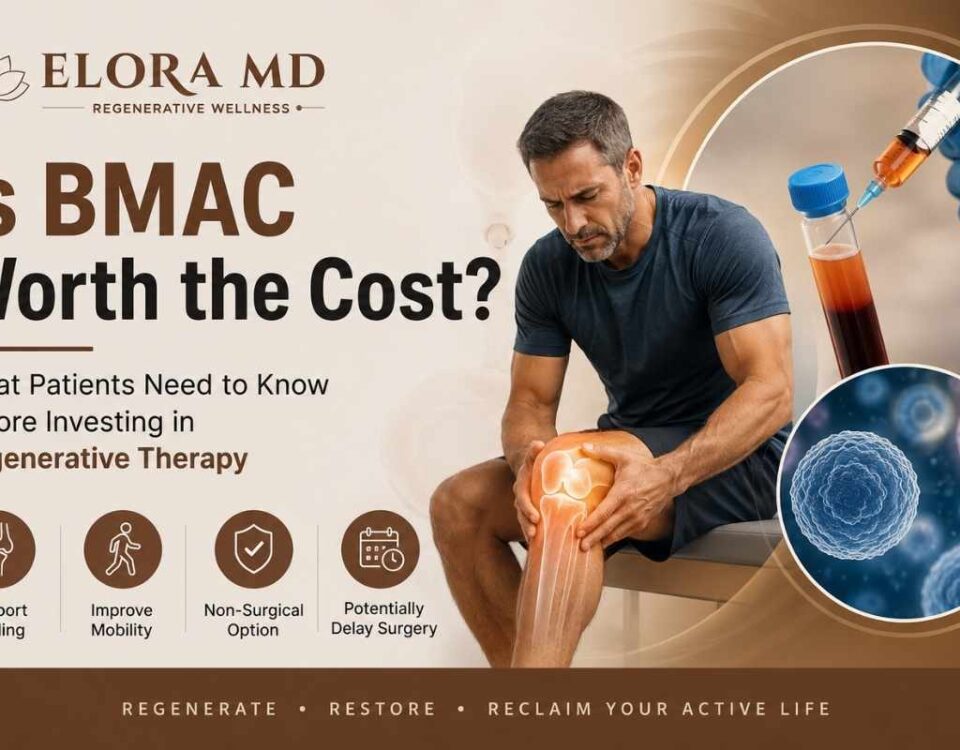
Lighten the Load: How Medical Weight Loss Can Reduce Knee and Lower Back Pain

Beyond the Quick Fix: Is Platelet-Rich Plasma (PRP) the Future of Pain Management?
May 13, 2026
Neer’s Test for Shoulder Impingement Explained
May 22, 2026
Have you ever felt your knees pop while walking up the stairs, or noticed your lower back giving out after standing for just a few minutes? You are not alone. All too often, we treat chronic joint pain with painkillers, heating pads, or massage therapy, while completely overlooking the literal mechanical culprit operating behind the scenes: excess body weight.
There is a direct, mathematical relationship between extra pounds and joint degeneration. Understanding this weight-pain connection is the first step toward realizing why medical weight loss approaches are actually some of the most effective treatments available for chronic pain management.
The Physics of Pain: How Much Weight Do Your Knees Actually Bear?
To understand why joints ache, we have to look at basic physics. Your knees and lower back do not experience your weight statically; they experience it under the compounding laws of gravity and motion.
- The Multiplier Factor: When walking on level ground, the pressure exerted on your knees is multiplied by 4. This means that if you are carrying just 10 pounds of excess weight, your knees are subjected to 40 pounds of additional pressure with every single step you take.
- The Impact on Inclines: When climbing a hill or using the stairs, that multiplier can spike to 7 or 8 times your actual body weight.
This constant mechanical overload acts like sandpaper on your cartilage the natural shock absorber of your joints. Over time, this excessive friction accelerates degenerative conditions like osteoarthritis, leaving bones to painfully rub directly against each other.
The Lumbar Spine: A Shifted Center of Gravity
The impact of excess weight is not restricted to your lower limbs; your lower back is another major casualty. When we carry extra weight in the abdominal area, our center of gravity shifts forward. To keep you from toppling over, your body automatically compensates by straining the lower back muscles and altering the natural curvature of the spine (a phenomenon known as hyperlordosis). This chronic muscle tension and asymmetrical pressure on the intervertebral discs is a flawless recipe for chronic lower back pain, herniated discs, and sciatica.
Beyond Mechanics: The Invisible Enemy of Chemical Inflammation
For a long time, medical science assumed the link between weight and joint pain was purely mechanical. Today, we know there is a second, equally dangerous factor at play: chemical inflammation.
Adipose tissue (body fat) is not just inert storage; it functions as an active endocrine organ that secretes proteins called inflammatory cytokines. These chemicals travel through your bloodstream and actively break down joint cartilage throughout the entire body. This explains a fascinating medical fact: people who carry excess weight frequently suffer from osteoarthritis in their hands and fingers areas that do not bear the primary physical weight of the body.
The Relief: The Transformative Impact of Shedding Pounds
The good news is that the human body responds with incredible speed when you take the load off. You do not need to reach a “perfect” goal weight to start feeling a drastic difference.
The Medical Data: Clinical studies in overweight and obese patients with knee osteoarthritis have shown that losing approximately 10% of body weight can meaningfully reduce pain and improve function, with some studies reporting pain improvement approaching 50%.
By shedding that excess pressure, you:
- Halt the premature wear and tear of joint cartilage.
- Allow your lower back muscles to return to their natural alignment without fatigue.
- Lower the levels of inflammatory cytokines in your blood, easing systemic body pain.
Bridging the Gap: Medical Weight Loss for Pain Management
When knee pain or back pain becomes severe, the traditional advice to “just exercise and eat better” becomes a cruel catch-22: you cannot exercise because it hurts too much, and because you cannot move, you gain weight, which increases the pain.
This is exactly where medical weight loss programs bridge the gap. Under professional medical supervision, you can utilize metabolic tools, specific anti-inflammatory nutritional plans, and targeted low-impact therapeutic exercises to break this painful cycle. It is not about aesthetics; it is a clinical intervention designed to restore your mobility and eradicate pain at its mechanical root.
If you want to protect your back and knees for the future, remember: every pound you release today is a profound breath of fresh air you are gifting to your joints.