Beyond the Quick Fix: Is Platelet-Rich Plasma (PRP) the Future of Pain Management?

Is PRP Therapy Right for You? See Its Pain Relief Potential and Natural Healing Power.
April 29, 2026
Lighten the Load: How Medical Weight Loss Can Reduce Knee and Lower Back Pain
May 21, 2026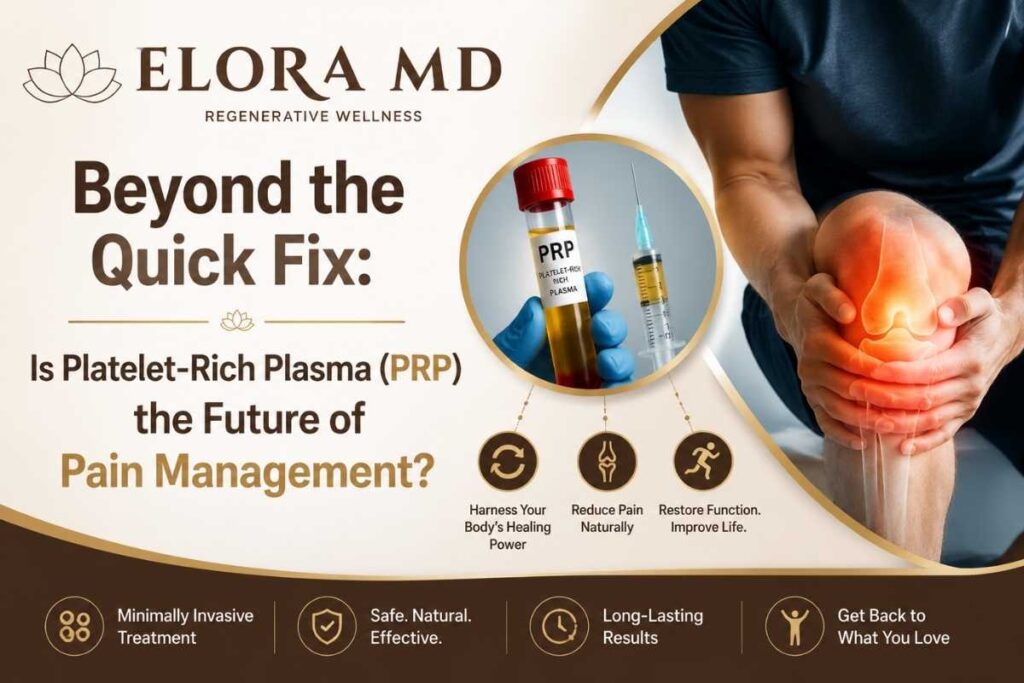
For decades, the “gold standard” for treating a persistent knee injury or tennis elbow was the cortisone shot. You walk in with a grimace, receive a synthetic steroid injection, and walk out feeling like the problem is solved.
But at Elora MD Regenerative Wellness, we believe there is a fundamental difference between masking pain and healing tissue. While cortisone is a master of disguise, Platelet-Rich Plasma (PRP) therapy is a master of restoration.
The landscape of modern pain management is shifting. We are moving away from temporary suppression and entering the era of biological repair. Here is why PRP is the catalyst for that change.
Suppression vs. Stimulation: The Biological Conflict
To understand why the medical community is pivoting toward regenerative medicine, we must look at what happens beneath the skin. Chronic pain is often the result of tendinosis (tissue degeneration) rather than just tendonitis (acute inflammation).
The Cortisone Approach
Cortisone is a powerful anti-inflammatory that works by shutting down the body’s immune response. In an acute crisis, this is highly effective. However, for chronic wear and tear, shutting down the immune system is like firing a construction crew because they are making too much noise. The noise (pain) stops, but the building (tissue) never gets repaired.
The PRP Approach
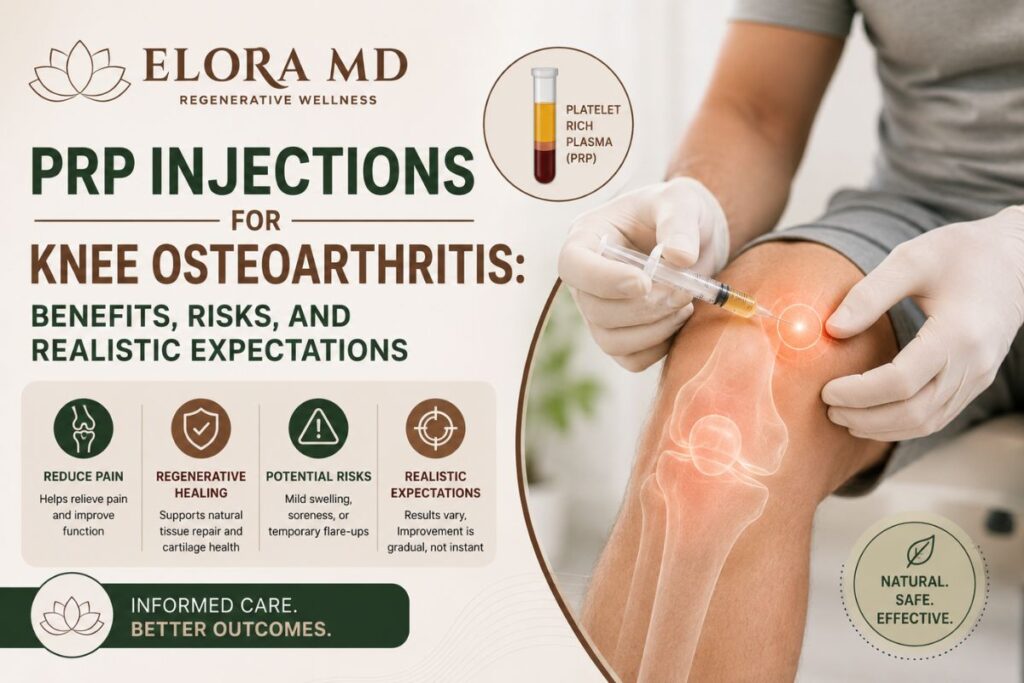
PRP does the opposite. It uses a concentrated dose of your own platelets to jumpstart the healing process. It essentially “re-alerts” the body to a chronic injury, sending a surge of biological resources to the site to begin structural repair.
The Cortisone Paradox: Immediate Relief vs. Long-Term Damage
Using cortisone for chronic pain management can be like taking out a high-interest loan. You get the “cash” (relief) immediately, but you pay for it later with potential tissue degradation.
- Inhibition of Repair: Cortisone can actually inhibit collagen synthesis—the essential protein that makes up your tendons and ligaments.
- Steroid-Induced Atrophy: Research suggests that repeated injections can lead to the thinning of cartilage and weakening of the structural integrity of the joint.
- The Outcome Gap: While cortisone users may feel better at the six-week mark, those who choose PRP injections often see significantly better functional outcomes and pain reduction at the one-year mark.
How PRP Works: Harnessing Your Inner Pharmacy
Platelet-Rich Plasma isn’t a drug; it is a concentration of your own biology. Your blood contains platelets which act as “signaling centers” for repair.
1. The Pro-Inflammatory “Spark”
Unlike steroids, PRP initially promotes a brief, controlled inflammatory phase. This “wakes up” the body’s repair kit, signaling that it is time to fix a site that the body may have stopped trying to heal.
2. Growth Factor Synergy
A PRP injection delivers a cocktail of essential proteins directly to the injury site:
- VEGF (Vascular Endothelial Growth Factor): Helps grow new blood vessels to bring oxygen to damaged tissue.
- TGF-B (Transforming Growth Factor-Beta): Promotes the growth of new connective tissue.
- EGF (Epidermal Growth Factor): Stimulates cell growth and collagen production.
3. Structural Restoration
While cortisone masks the signal of pain, PRP addresses the source. Whether it is a worn joint or a damaged tendon, PRP provides the raw materials to help rebuild the tissue.
Is it Time to Move Beyond the Mask?
If you have been caught in a cycle of “injection, relief, and relapse,” it is time to look beyond temporary fixes. Pain is your body’s way of asking for help, not just asking for silence.
Elora MD Regenerative Wellness specializes in advanced regenerative protocols, ensuring your treatment is as unique as your biology. Let’s stop just managing your pain and start accelerating your recovery.
Schedule a Consultation
Ready to explore the benefits of PRP for pain management? Contact Elora MD Regenerative Wellness today to discover a path back to performance that focuses on true healing.