
GLP-1 Medications and Muscle Loss: How to Preserve Lean Mass During Medical Weight Loss

What Causes Chronic Inflammation? The Hidden Driver of Pain and Aging
August 6, 2026
PRP Injections for Knee Osteoarthritis: Benefits, Risks, and Realistic Expectations
August 17, 2026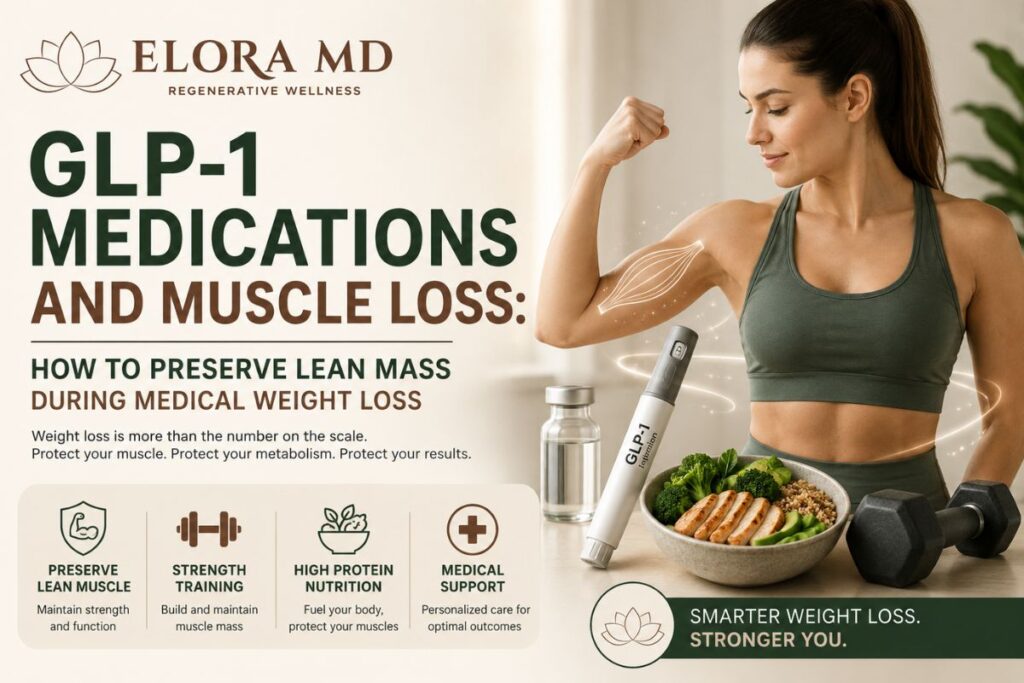
By Dr. Pooja Chopra, MD | Elora MD Regenerative Wellness | Newport Beach, CA
Last medically reviewed: August 2026
Quick answer: Semaglutide and tirzepatide do not selectively “burn muscle,” but meaningful weight loss can reduce both fat mass and lean soft tissue. The goal of a high-quality medical weight-loss program is not simply a lower number on the scale; it is to prioritize fat loss while preserving strength, function, nutrition, and long-term metabolic health through adequate protein, progressive resistance training, and individualized medical follow-up.
GLP-1–based medications have changed what is possible in medical weight management. FDA-approved options such as Wegovy® (semaglutide) and Zepbound® (tirzepatide) can help appropriate patients achieve clinically meaningful and durable weight loss when used alongside a reduced-calorie eating pattern and increased physical activity.
That success comes with an important clinical question: How can you lose body fat without losing more lean tissue than necessary?
At Elora MD Regenerative Wellness in Newport Beach, we believe weight-loss success should be measured by more than the scale. Our concierge medical weight-loss approach focuses on the quality of weight loss: supporting metabolic health, protecting physical function, and helping patients maintain the strength needed for an active, resilient life.
Do GLP-1 Medications Cause Muscle Loss?
GLP-1–based medications do not directly target or dissolve skeletal muscle. They primarily lower calorie intake by affecting appetite regulation; they also delay gastric emptying. Tirzepatide is a dual GIP/GLP-1 receptor agonist, while semaglutide is a GLP-1 receptor agonist.
However, whenever a person loses a meaningful amount of weight– whether through medication, surgery, dietary change, or illness– some loss of lean soft tissue is expected alongside fat loss. In body-composition substudies of semaglutide and tirzepatide trials, lean soft tissue accounted for approximately 26% to 40% of total weight lost, while fat loss remained greater than lean-tissue loss.
It is important not to overinterpret this number. DXA-derived lean soft tissue is not identical to skeletal muscle: it also reflects water and other non-fat, non-bone tissues. Even so, preserving muscle mass and strength deserves special attention during weight loss- particularly for adults over 50, people with low baseline strength, patients with osteopenia or osteoporosis risk, and anyone with chronic pain or limited mobility.
Why Preserving Lean Mass Matters
Muscle supports far more than appearance. Skeletal muscle helps you move safely, perform daily activities, maintain balance, and regulate blood sugar. During weight loss, protecting muscle and strength helps preserve function and supports long-term health.
| Why Lean Mass Matters | What Can Happen When It Declines Too Much |
| Strength and independence | Stairs, lifting, balance, and daily tasks may become more difficult. |
| Joint and movement capacity | Lower strength can make it harder to tolerate the physical demands placed on the hips, knees, and spine. |
| Metabolic health | Skeletal muscle is a major site of glucose disposal and contributes to resting energy expenditure. |
| Bone and fall-risk prevention | Weight loss can reduce mechanical loading on bone; resistance training and nutrition are especially important for at-risk adults. |
| Long-term weight maintenance | Sustainable results are more likely when nutritional adequacy, movement, sleep, and a realistic maintenance plan are addressed alongside medication. |
The concern is not that every decrease in lean soft tissue is harmful. Weight loss often improves mobility, cardiometabolic health, and muscle quality by reducing fat infiltration within and around muscle. The objective is to minimize avoidable muscle loss while maximizing fat loss and physical function.
Four Evidence-Based Strategies to Preserve Muscle During GLP-1 Treatment
1. Make Protein a Daily Priority
Appetite suppression can make it difficult to eat enough overall, and protein is often the first nutrient to fall short. Protein supplies amino acids that support muscle protein synthesis and recovery.
For many adults undergoing active weight loss, a protein target of roughly 1.2 to 1.5 grams per kilogram of body weight per day may be appropriate, but the right target must be individualized. Protein requirements should be adjusted for a person’s age, activity level, kidney function, medical history, total calorie intake, and weight-loss rate.
A practical strategy is to build each meal around a protein source and spread protein across the day rather than attempting to eat the entire amount at dinner. Options may include fish, poultry, eggs, Greek yogurt, cottage cheese, tofu, tempeh, beans, and lean meats. If nausea, early fullness, or a busy schedule makes whole-food intake difficult, a high-quality oral protein shake may be a convenient supplement- not a replacement for a balanced eating pattern.
Important: Patients with chronic kidney disease, advanced liver disease, pregnancy, a history of eating disorders, or other significant medical conditions should not adopt a high-protein plan without individualized guidance from their clinician.
2. Prioritize Progressive Resistance Training
If protein supplies the building blocks, resistance training gives the body a reason to retain muscle. Resistance exercise creates the mechanical stimulus that helps maintain muscle mass, strength, and bone-supporting load during energy restriction.
For most medically cleared adults, a practical starting framework is two to three full-body resistance-training sessions per week, with exercises tailored to fitness level, mobility, and any orthopedic limitations. Training may involve machines, free weights, resistance bands, or body-weight movements. The key principle is gradual progression: as movement quality and strength improve, the exercise stimulus should become more challenging.
Aerobic exercise remains essential for cardiovascular health, conditioning, and overall energy expenditure. But during active weight loss, it should be paired with- not substituted for- resistance training.
If you are new to exercise, have significant joint or back pain, or are returning after an injury, begin with a medically appropriate plan and consider support from a qualified physical therapist or exercise professional.
3. Avoid Extreme Calorie Restriction and Treat Side Effects Early
Rapid, poorly supported weight loss can make it harder to meet protein, fluid, and micronutrient needs. GLP-1–based medications are prescribed with gradual dose escalation to improve tolerability, and common adverse effects can include nausea, vomiting, diarrhea, constipation, and abdominal discomfort.
At Elora MD, medical weight-loss care includes monitoring medication tolerance and adjusting the approach when symptoms interfere with hydration, nutrition, or daily function. A slower titration, a revised eating strategy, or a different treatment plan may be appropriate depending on the individual clinical picture.
Persistent severe abdominal pain, repeated vomiting, inability to keep fluids down, or symptoms of dehydration require prompt communication with the prescribing clinician. These symptoms should never be dismissed as a normal part of weight loss.
4. Track Function, Not Just Weight
The scale is useful, but it cannot tell you whether you are maintaining strength, eating enough protein, or moving well. A high-quality program monitors the patient—not merely the prescription.
At Elora MD, we use a concierge approach that may include reviewing weight trend, waist measurement, dietary intake, medication tolerance, resistance-training participation, energy level, and day-to-day functional capacity. Basic laboratory evaluation- including a CBC, CMP, and hs-CRP when clinically appropriate– can help inform the broader health and safety picture. These tests do not directly measure muscle mass; rather, they are part of a thoughtful medical assessment that guides individualized care.
When Joint Pain Limits Your Ability to Train
For many people, joint, tendon, or back pain becomes the barrier to the very resistance training that helps preserve lean mass. That deserves a proper diagnostic evaluation- not simply a recommendation to “push through it.”
Elora MD provides personalized assessment for musculoskeletal pain and performance limitations. For appropriately selected, localized orthopedic conditions, PRP or Bone Marrow Aspirate Concentrate (BMAC) may be considered as part of a broader treatment plan. These procedures are not weight-loss treatments and are not intended to prevent systemic lean-mass loss from GLP-1 therapy. Their role, when appropriate, is to address a specific musculoskeletal diagnosis so that a patient can participate more safely and consistently in the foundational strategies that matter most: nutrition, progressive movement, sleep, and medical follow-up.
The Elora MD GLP-1 Weight-Loss Philosophy
A medication can be a powerful tool, but it should never be the entire plan. Elora MD’s concierge medical weight-loss care is built around a more complete definition of success:
- A careful medical evaluation to determine whether GLP-1–based therapy is clinically appropriate.
- Personalized prescribing and follow-up with attention to safety, tolerability, and sustainable weight-loss pace.
- Clinical nutrition guidance that emphasizes protein adequacy, hydration, fiber, and realistic eating habits.
- Medical weight optimization, including GLP-1 therapy when appropriate.
- Basic laboratory monitoring, including CBC, CMP, and hs-CRP when clinically indicated.
- Strength- and function-focused lifestyle guidance to support a more durable result.
- Integrated musculoskeletal evaluation when joint or tendon pain limits physical activity, with PRP or BMAC considered only when medically appropriate for a confirmed localized condition.
This integrated approach is designed for patients who want more than a prescription. It is for people who want to lose fat, protect their strength, and build a healthier foundation for the years ahead.
Frequently Asked Questions
Do semaglutide and tirzepatide make you lose muscle?
They can be associated with a reduction in lean soft tissue as part of substantial weight loss, but they do not selectively target muscle. Clinical trial data show greater fat loss than lean-tissue loss. Protein adequacy, resistance training, appropriate rate of weight loss, and clinical monitoring can help reduce avoidable loss of muscle and function.
How much protein should I eat while taking a GLP-1 medication?
There is no single protein target that fits everyone. Many weight-loss protocols use individualized goals around 1.2 to 1.5 grams per kilogram of body weight per day, but your target should account for kidney function, age, activity level, appetite, health conditions, and calorie intake. Your clinician can help establish a safe and realistic goal.
Is cardio enough to protect muscle during GLP-1 weight loss?
Cardiovascular exercise is important for heart health and fitness, but resistance training is the central exercise strategy for preserving muscle strength and supporting bone health during weight loss. A balanced program usually includes both.4
Can PRP or BMAC prevent GLP-1 muscle loss?
No. PRP and BMAC are not treatments for systemic lean-mass loss or obesity. For selected patients, they may be considered for specific musculoskeletal conditions that limit exercise. The primary strategies for preserving lean mass are adequate nutrition, progressive resistance training, recovery, and medical monitoring.
Are GLP-1 medications safe for everyone?
No. GLP-1–based medications require an individualized medical review. Semaglutide and tirzepatide carry important contraindications, warnings, and precautions, including contraindication in patients with a personal or family history of medullary thyroid carcinoma or Multiple Endocrine Neoplasia syndrome type 2. Your prescriber should also review gastrointestinal symptoms, gallbladder disease risk, pancreatitis history, diabetes medications, kidney health, pregnancy plans, and relevant medical history before and during treatment.
Redefine What Success Looks Like
The best outcome from GLP-1–based medical weight loss is not simply less weight. It is a body that is lighter, stronger, well nourished, and capable of supporting the life you want to live.
If you are in Newport Beach or greater Orange County and want a physician-guided weight-loss strategy that protects your strength as well as your metabolic health, contact Elora MD Regenerative Wellness to schedule a comprehensive medical weight-loss consultation.