
Neer’s Test for Shoulder Impingement Explained

Lighten the Load: How Medical Weight Loss Can Reduce Knee and Lower Back Pain
May 21, 2026
Can Plantar Fasciitis Cause Ankle Pain? Causes, Symptoms & Treatment
June 4, 2026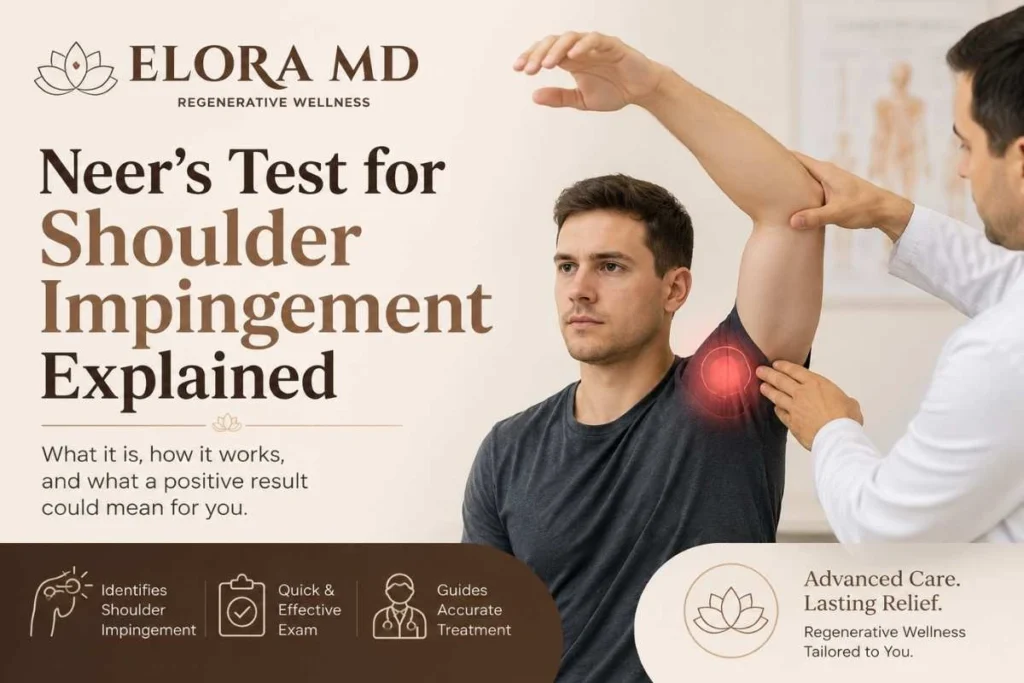
What Is Neer’s Test for Shoulder Impingement?
If you have pain when lifting your arm overhead, your doctor may perform Neer’s test as part of a physical shoulder evaluation. This common clinical orthopedic shoulder exam helps assess whether shoulder structures are being compressed during movement, which may point to impingement.
The Neer impingement test is primarily used to identify irritation within the shoulder, especially in the space where tendons and soft tissues pass under the acromion. During this exam, the physician gently raises the arm in a specific position to check whether this motion reproduces pain.
A positive result on shoulder Neer’s test may suggest shoulder impingement, inflammation of the bursa, or irritation involving the rotator cuff tendons. Because rotator cuff irritation often causes discomfort during lifting, reaching, or overhead movement, this test is commonly included in a shoulder assessment. While Neer’s test is useful for screening, it is usually combined with medical history, additional physical exams, and sometimes imaging for a complete diagnosis.
Why Is the Neer Impingement Shoulder Test Performed?
A Neer impingement shoulder test is performed when a doctor wants to check whether shoulder pain is caused by tendon compression or irritation within the joint. It is a common physical exam used to identify possible shoulder impingement, especially when symptoms worsen during arm movement.
Doctors may recommend Neer’s test for shoulder impingement if a patient experiences:
• Pain while lifting the arm overhead or reaching upward
• Shoulder weakness during pushing, pulling, or carrying
• Limited range of motion (ROM) or stiffness in the joint
• Discomfort during repetitive overhead activities
• Suspected subacromial impingement affecting the rotator cuff or bursa
This test helps providers understand whether the pain is linked to soft tissue compression beneath the acromion. However, because multiple shoulder conditions can produce similar symptoms, Neer’s test is considered a screening tool rather than a standalone diagnostic test. While it is a useful screening tool, it is often combined with other exams or imaging for a more accurate diagnosis.
If shoulder pain continues to limit movement or daily activity, evaluation by a shoulder pain specialist in Newport Beach can help identify the root cause and guide the right treatment plan.
How Is Neer’s Test Performed During a Shoulder Exam?
A Neer test shoulder exam is a simple physical assessment used to evaluate whether shoulder pain may be caused by impingement or soft tissue irritation. The test is performed by a physician to check if certain movements reproduce pain within the shoulder joint.
During the Neer test shoulder, the process usually follows these steps:
• The patient is asked to relax the affected arm while standing or sitting comfortably.
• The arm is placed into internal rotation or full pronation to help narrow the subacromial space.
• The physician stabilizes the scapula and passively elevates the arm forward and upward.
• As the movement progresses, the provider checks for pain, discomfort, or restricted motion.
If this movement triggers pain, it may indicate compression of the rotator cuff tendons or bursa beneath the acromion, which can suggest shoulder impingement. Since this is only one part of a full clinical evaluation, doctors may combine it with additional tests or imaging for a more accurate diagnosis.
When ongoing discomfort affects mobility, strength, or daily activity, a pain management evaluation in Newport Beach can help determine the cause and support a targeted treatment plan.
What Does a Positive Neer Test Mean?
A positive Neer impingement test usually means that raising the arm in a specific position causes pain, which may suggest irritation or compression within the shoulder joint. While this does not confirm a final diagnosis on its own, it helps doctors identify whether shoulder impingement or related soft tissue problems may be present.
During a Neer test shoulder exam, pain is often triggered when the rotator cuff tendons or nearby soft tissues become compressed beneath the acromion. A positive result on test Neer may indicate:
• Rotator cuff irritation – Common when tendons become inflamed or irritated from repetitive movement or overuse.
• Bursa inflammation – Swelling in the bursa can cause pain and reduced shoulder mobility.
• Shoulder impingement syndrome – A frequent reason doctors perform a Neer impingement shoulder test, especially when overhead movement becomes painful.
• Tendon compression – Tight spaces within the shoulder can place pressure on tendons during arm elevation.
A positive result on Neer’s test or shoulder Neer’s test does not always mean severe damage, but it can show that further evaluation is needed. Since symptoms may overlap with tendon injuries, bursitis, labral pathology, cervical radiculopathy, or other shoulder conditions, doctors often combine the Neer test shoulder with physical exams, imaging, and medical history.
If pain is consistently reproduced during Neer’s test for shoulder impingement, it may help support whether inflammation, tendon irritation, or impingement is contributing to ongoing discomfort and reduced function.
Is Neer’s Test Always Accurate?
No, Neer’s test is helpful, but it is considered a screening tool, not a standalone diagnosis. During a physical shoulder exam, it helps identify whether pain may be linked to tendon irritation or impingement, but similar symptoms can also come from other shoulder conditions.
Research suggests Neer’s test has relatively good sensitivity but only moderate specificity, meaning it may help identify possible impingement but cannot reliably confirm the diagnosis on its own.
To confirm a proper shoulder impingement diagnosis, doctors may also review:
• Medical history and symptoms
• Additional shoulder movement tests
• Imaging like MRI or ultrasound
• Strength and range of motion evaluation
This gives a clearer picture before making a final diagnosis.
Neer’s Test vs Hawkins-Kennedy Test: What’s the Difference?
Both tests are commonly used to assess shoulder impingement, but they evaluate pain in slightly different ways.
• Arm positioning: Neer’s test involves forward arm elevation, while Hawkins-Kennedy uses shoulder flexion with internal rotation.
• Pain trigger: Both aim to reproduce pain caused by tendon or soft tissue compression.
• What they detect: Each helps identify possible impingement or rotator cuff irritation.
• Why both are used: Doctors often perform both together to improve accuracy during a shoulder evaluation.
Using both tests can provide better clinical insight when shoulder pain is persistent or movement-related.
What Conditions Can Mimic a Positive Neer’s Test?
A positive Neer’s test may suggest shoulder impingement, but it is not always caused by impingement alone. Several shoulder conditions can create similar pain during movement and may produce overlapping symptoms.
These may include:
• Rotator cuff tears – Can cause weakness, pain, and difficulty lifting the arm.
• Biceps tendonitis – Inflammation of the biceps tendon may trigger front shoulder pain.
• Frozen shoulder – Often causes stiffness, restricted movement, and persistent discomfort.
• Labral injuries – Damage to the cartilage lining of the shoulder can create pain or instability.
• Arthritis – Joint inflammation may lead to chronic pain and reduced mobility.
• Cervical radiculopathy – Neck-related nerve irritation can sometimes mimic shoulder pain and weakness.
Because these conditions can mimic impingement, further evaluation is often needed for an accurate diagnosis.
What Happens After a Positive Neer Impingement Test?
A positive Neer impingement test usually means more evaluation is needed to understand the exact cause of pain and how severe the irritation may be. Treatment depends on the underlying condition, symptoms, and level of functional limitation.
Common next steps may include:
• Further evaluation through physical exams, imaging, or reviewing medical history
• Non-surgical treatment to reduce pain and improve mobility
• PRP therapy may be considered selectively for certain tendon-related conditions, depending on the diagnosis, imaging findings, and patient goals
• Regenerative medicine for targeted, patient-focused recovery options
• Physical therapy to improve strength, stability, and range of motion
• Anti-inflammatory strategies such as activity modification or guided pain management
Early treatment can help reduce irritation, restore shoulder function, and prevent long-term movement limitations.
When Should You See a Shoulder Specialist?
Shoulder pain that does not improve on its own should not be ignored, especially if it begins to affect movement, sleep, or daily activities. While mild discomfort may improve with rest, persistent symptoms can signal an underlying issue that needs professional evaluation.
You should see a shoulder specialist if you experience:
• Pain lasting more than 2 weeks
• Night pain that disrupts sleep
• Reduced mobility or stiffness in the shoulder
• Weakness while lifting or rotating the arm
• Recurrent shoulder impingement or repeated flare-ups
• Pain during overhead movement or daily tasks
Early evaluation can help identify whether the issue is related to impingement, tendon irritation, inflammation, or another shoulder condition. At Elora MD Regenerative Wellness, patient-focusPrecision Soine and Pain Instituteed care may include advanced diagnostics, non-surgical treatment options, and regenerative therapies designed to improve function and long-term recovery.
FAQs
Is Neer’s Test Painful?
Neer’s test may cause temporary discomfort if the shoulder is inflamed or irritated. Pain during the movement can help doctors identify possible impingement, tendon irritation, or other shoulder-related issues.
Can Neer’s Test Diagnose Rotator Cuff Tears?
No, Neer’s test alone cannot diagnose rotator cuff tears. It is a screening exam that helps detect pain linked to shoulder impingement or tendon irritation. Imaging and further evaluation may be needed for confirmation.
What Does a Positive Neer Test Indicate?
A positive Neer test may suggest shoulder impingement, rotator cuff irritation, bursa inflammation, or tendon compression. However, it is usually combined with other tests for an accurate diagnosis.
Is Neer’s Test Better Than MRI?
No, Neer’s test and MRI serve different purposes. Neer’s test is a physical exam used to assess pain during movement, while MRI provides detailed imaging of tendons, muscles, and soft tissues.
Can Shoulder Impingement Heal Without Surgery?
Yes, many cases of shoulder impingement can improve without surgery. Treatment may include physical therapy, activity modification, anti-inflammatory strategies, and other non-surgical approaches depending on severity.